
If you’ve made it through the initial hurdle of a sober January, you’ve accomplished something monumental. But as the sharp urgency fades, a new challenge emerges: the quiet, persistent search for stability. Your body, accustomed to one kind of chemical regulation, is now navigating unfamiliar terrain. Often, it translates this search into cravings—for sugar, for comfort food, for anything that offers a quick spike of feeling “okay.”
It’s crucial to understand: this isn’t a moral failure. It’s a biological negotiation.
In the earliest days, our focus is on hydration and immediate coping tools. But for the journey to be sustainable, we must move from mere endurance to active replenishment. We must learn to see food not as a substitute for what we’ve given up, but as the primary fuel for the new life we’re building.
This is where a simple, compassionate framework makes all the difference.
1. Stabilize the Foundation: Blood Sugar as Your Mood’s Thermostat
When your blood sugar plummets, anxiety and irritability spike. It’s a physiological fact, not a character flaw. The goal is gentle, consistent nourishment.
- The Practice: Every 3-4 hours, have a small amount of protein and healthy fat—a handful of almonds, a hard-boiled egg, some plain Greek yogurt. This combination provides a slow, steady release of energy, keeping your brain’s “panic button” from being pushed.
- The Principle: You are manually regulating your internal environment. As it is written, “He has filled the hungry with good things” (Luke 1:53). We participate in that filling by choosing the “good things” that provide lasting satiety, not fleeting spikes.
2. The Recovery Plate: A Template for Tranquility
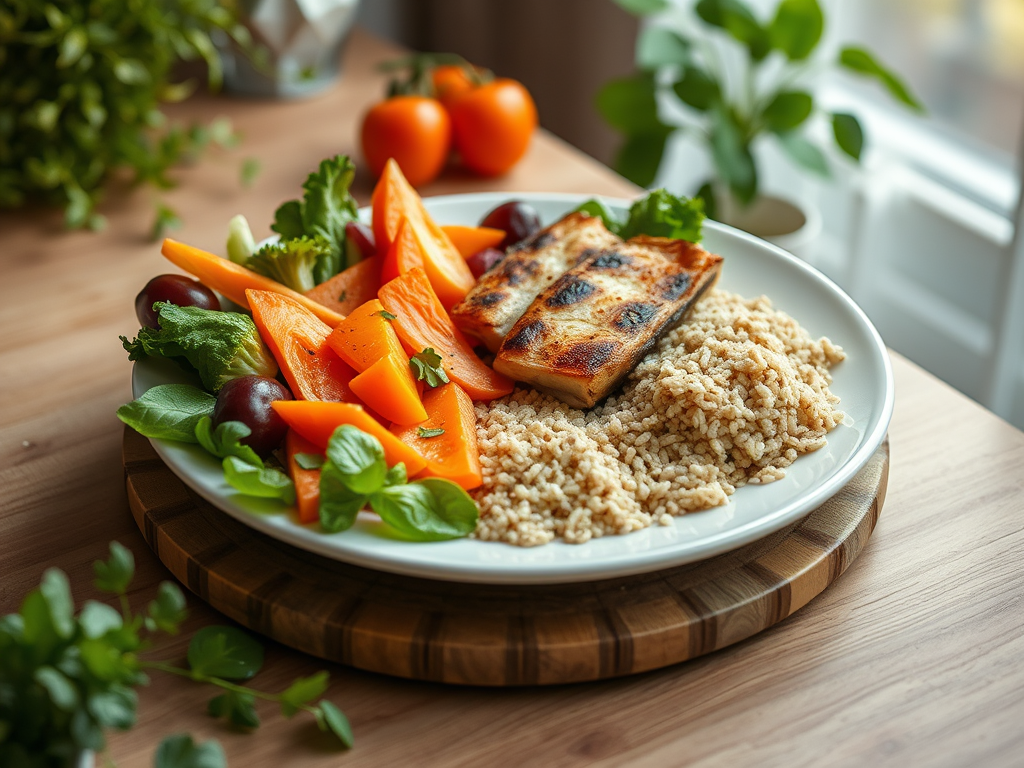
Forget complex diets. Use this visual guide for main meals:
- Half your plate: Colorful, non-starchy vegetables (for nutrients and volume).
- A quarter of your plate: Lean protein (for repair and satiety).
- A quarter of your plate: Complex carbohydrates (for sustained energy).
This isn’t about restriction; it’s about intentional construction. You are building a meal that builds calm. You are honoring the temple you’ve been given. “So, whether you eat or drink, or whatever you do, do all to the glory of God” (1 Corinthians 10:31). Eating to stabilize your mind and honor your recovery is a profound act of stewardship and worship.
Ready for More Unfiltered Truth?
This video is part of my mission at Grateful Truce to cut through the noise of the recovery industry. If this honest look behind the curtain helped you, there’s more on my YouTube channel.
👉 Subscribe to the Grateful Truce YouTube Channel here for video teachings on sobriety, recovery, and finding a real path forward.
Your subscription is the strongest support for this independent work.
3. The Mindset Shift: From Deprivation to Stewardship
The goal is to stop fighting your body and start partnering with it. That afternoon craving isn’t a demon to be defeated; it’s a signal to be decoded. Is it thirst? Is it a need for protein? Is it emotional hunger that would be better served by a walk or a prayer?
Hydration remains your first responder. Drink water. Then assess.
This phase of recovery is about moving from surviving to curating a stable inner world. Every mindful choice at the table is a brick in the foundation of your new peace. It is a practical, daily way to love the self that God is redeeming.
Be patient. Be consistent. Feed not just your body, but your recovery.
Here is Part One: Part Two will be available after 6PM PST today on the Grateful Truce You Tube Channel.
Chris Mosser
Author of Grateful Truce & The AGI Dilemma




 Grateful Truce
Leave a comment